


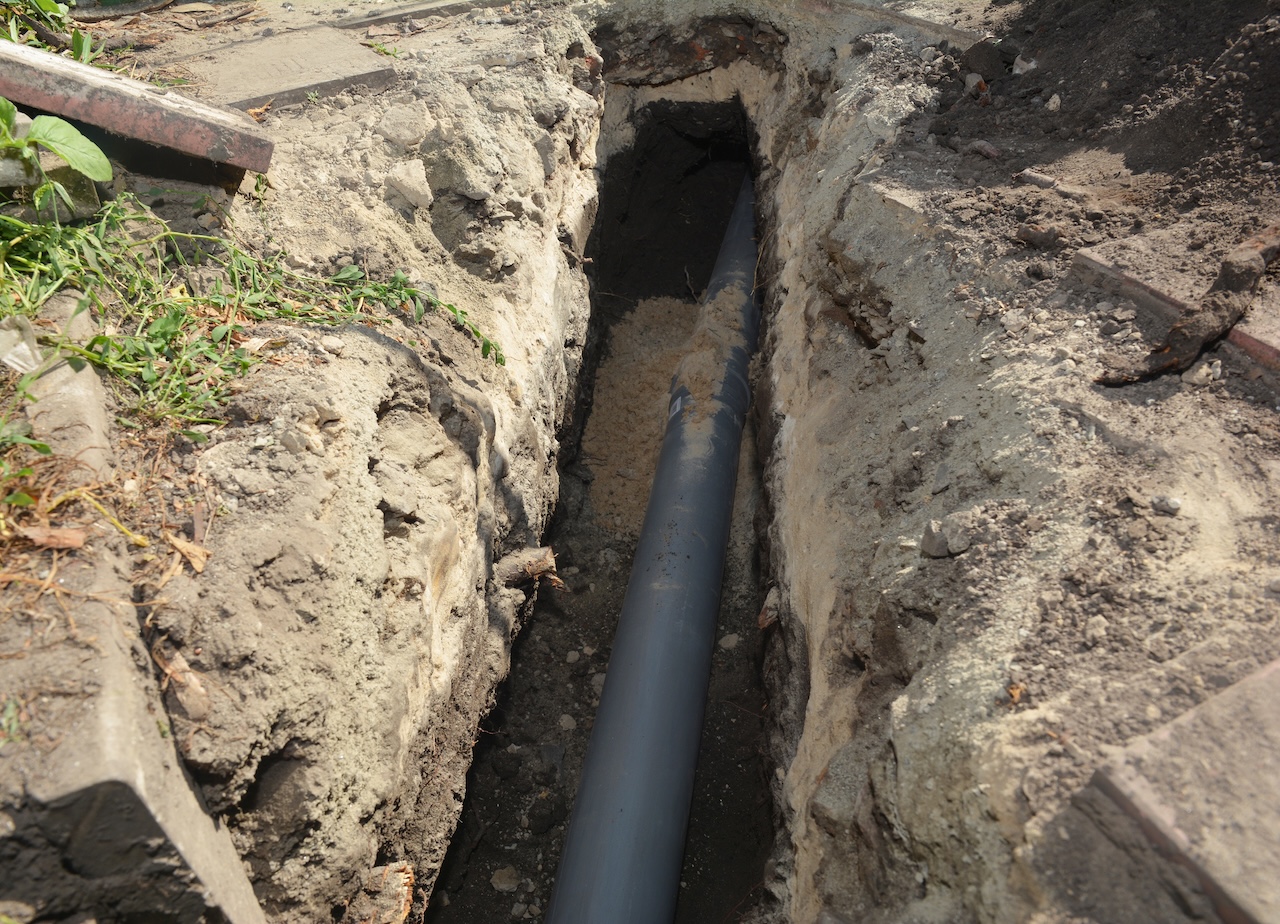

Slow drains. A gurgle from the basement floor drain. A smell in the yard that shows up after a heavy laundry day. Most homeowners hope it's a clog, and a lot of the time it is. But when the same problem keeps coming back after it's been cleared, the pipe itself is usually the reason.
Here's the part homeowners rarely hear first: a failing sewer line doesn't automatically mean digging up the yard. Lining the pipe from the inside is a real fix, and it's the right answer more often than most people expect. This guide covers the sewer line replacement signs worth paying attention to, what cured-in-place pipe repair can and can't solve, and how to tell when a full main sewer line replacement in Dayton, OH, is genuinely the better long-term call.
What Your Main Sewer Line Does, and Why It Fails
One pipe carries wastewater from every toilet, sink, shower, and appliance in the house out to the municipal main. It's buried a few feet under the yard, which is why nobody thinks about it until it stops cooperating.
Lines fail for ordinary reasons. Clay and cast iron break down over decades. Tree roots find a joint and work their way in. Soil shifts and pulls a section out of alignment. Grease narrows the pipe. Nearby digging cracks it.
What matters isn't just that the pipe is damaged. It's how it's damaged. Cracked joints and root intrusion in an otherwise round, structurally sound pipe are often a good fit for lining. A pipe that has collapsed or lost its shape is not.
Signs Worth Getting a Camera On
- Backups that keep coming back. One slow fixture is usually local. Multiple fixtures backing up at once, or the same backup returning after it's been cleared, points at the main line.
- Sewer odor inside or in the yard. A working sewer line is sealed. A smell means gas is escaping through a crack or a failed joint.
- A green or soggy strip in the lawn. A leaking line fertilizes the soil above it. If one strip of grass is greener and faster-growing than everything around it, or one spot stays wet with no rain to explain it, that's worth looking at.
- Foundation cracks or a settling low spot. A line that's been leaking a long time can wash out soil under the slab. This one takes a while to develop, which is why it's usually a sign of an older problem rather than a new one.
- Old pipe material. Homes built before the 1980s often still have the original clay, Orangeburg, or cast iron. Age alone doesn't mean the pipe has to go, but it does change which repair methods will hold.
None of these five tells you repair or replace on its own. A camera inspection does. Reputable sewer line replacement contractors put a camera in the line before recommending anything, and they show you the footage.
Cured-In-Place Pipe Repair: Fixing the Pipe Without Digging It Up
Cured-in-place pipe repair, or CPR, rebuilds the pipe from the inside. A resin-saturated liner goes in through an existing access point, gets pressed against the interior wall, and cures into a hard, seamless pipe inside the old one. No trench. The yard, the driveway, and the landscaping stay where they are.
For a lot of the problems homeowners call about, this is the fix:
- Cracked or separated joints
- Root intrusion at joints
- Corroded cast iron with the shape still intact
- Small leaks and offset sections
- Interior scaling and buildup that keeps catching debris
The new liner is smooth and jointless, which is the quiet advantage. Roots get in through joints. Take away the joints and you take away the way back in.
CPR has limits, and an honest inspection will tell you where they are. If the pipe has collapsed, lost its round shape, or has a severe sag holding standing water, there's nothing left to line against. Those lines need to come out.
Drain Lining for the Lines Inside the House
The same approach works on smaller drain lines, not just the main. Kitchen and laundry branches, older cast iron stacks, and basement drains that clog on a schedule are often lining candidates. It's a common fix in older Dayton and Troy homes where the drain lines are original to the house and the clogs have become a pattern rather than an event.
Lining an interior drain also avoids the part homeowners dread most: cutting concrete or opening walls to reach a pipe that's technically still there.
When Replacement Is the Right Call
Sometimes the pipe is past lining. When that's the case, there are two legitimate paths, and both produce a sewer line that will outlast the one it replaced.
Trenchless replacement. A new full-length liner or a new pipe pulled through the old path, done from access points at either end. No open trench down the length of the yard. Less restoration work afterward, shorter job, and the mature trees and the driveway stay put. Where the pipe's condition allows it, this is usually the option we'd point a homeowner toward first.
Excavation with new pipe. Open-cut, old pipe out, new PVC in. This is the right answer when a line has collapsed, when the depth or the run makes trenchless impractical, or when the pipe's path needs to change. It's more disruptive on the surface, and it's also the most direct way to put a fully new line in the ground with the grade set correctly. Properly installed and maintained PVC has a long service life.
Neither one is the shortcut version. They solve for different pipe conditions. Anyone quoting sewer line replacement in Dayton, OH, or sewer line replacement in Troy, OH, should be able to explain which one your line calls for and why the other one doesn't work here.
How the Decision Actually Gets Made
Replacement is sometimes right. It's never the default.
A plumber sewer line replacement recommendation should come after a camera inspection, not before it. You should see the footage. You should hear what the pipe's actual condition is, which repair methods it can support, and what each one costs, before anyone asks you to decide anything.
That's the standard at Korrect Plumbing. Our technicians aren't on commission, so there's no incentive to steer a lining job into a replacement job. We give pricing over the phone, our trucks are stocked, and we tell homeowners when the fix is smaller than they were braced for.
Get Your Line Inspected
If drains are backing up more than once, or something in the yard doesn't look right, a camera inspection will tell you where you stand. Korrect Plumbing has served Dayton and Troy homeowners for 75 years, with cured-in-place pipe repair, drain lining, trenchless work, and main sewer line replacement in Dayton, OH.
Call Korrect Plumbing to schedule an inspection and get a straight read on your line.