
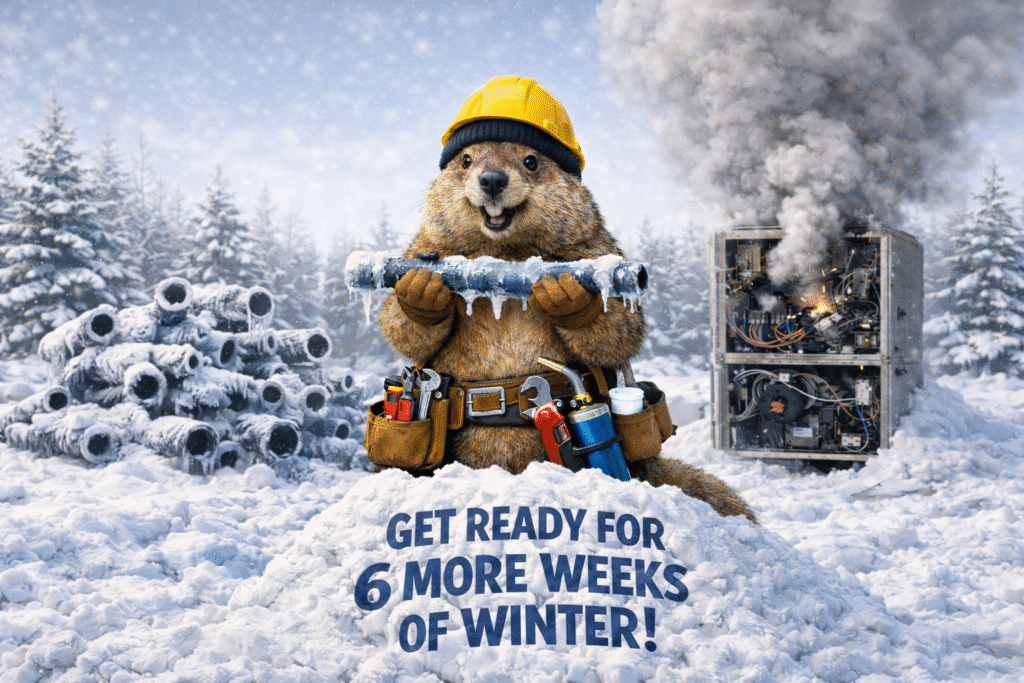
Every year on February 2nd, Punxsutawney Phil pops out, looks around, and gives us his prediction.
This year? Six more weeks of winter.
And while that might just mean a few more snow days for some people, for homeowners it means something more serious:
👉 More stress on your plumbing
👉 More strain on your furnace
👉 More risk of frozen pipes, breakdowns, and emergency repairs
Winter isn’t done with us yet — and the coldest, most damaging failures usually happen after the holidays, not before.
Let’s talk about why preventative maintenance matters, what can go wrong if it’s ignored, and a few simple things you can do right now to protect your home.
Why the Last Half of Winter Is the Most Dangerous for Your Home
By February, your home systems have already been working overtime for months.
- Furnaces have run nonstop since December
- Pipes have endured repeated freeze-thaw cycles
- Seals, fittings, and motors are already fatigued
This is when small issues turn into big failures.
A furnace that “sounds a little off”
A pipe that froze but didn’t burst — yet
A weak blower motor hanging on by a thread
Most winter breakdowns don’t come out of nowhere.
They come from missed warning signs.
The Hidden Cost of Frozen Pipes
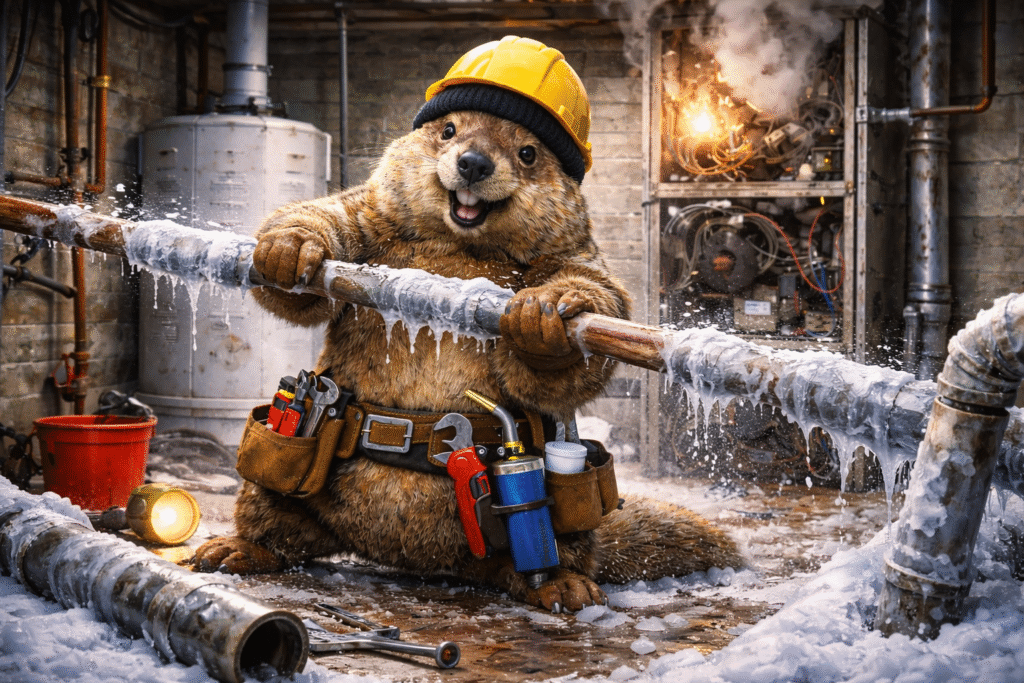
Frozen pipes are one of the most expensive winter plumbing disasters — and they often happen overnight.
When water freezes, it expands.
That pressure can crack copper, PVC, or PEX lines inside walls, ceilings, or crawlspaces.
Common causes of frozen pipes include:
- Poor insulation
- Unheated basements or crawlspaces
- Garage plumbing lines
- Exterior walls during prolonged cold snaps
- Inconsistent indoor temperatures
And here’s the kicker:
Most people don’t realize a pipe burst until it thaws.
That’s when flooding starts.
Furnaces Fail at the Worst Possible Time
Your furnace doesn’t pick a convenient moment to quit.
Most furnace failures happen:
- During extreme cold
- Overnight
- On weekends
- During peak demand when parts and technicians are harder to schedule
Common furnace issues we see late in winter:
- Dirty or clogged filters
- Worn igniters
- Failing blower motors
- Cracked heat exchangers
- Thermostat miscommunication
- Poor airflow due to neglected maintenance
Preventative furnace maintenance isn’t about upselling — it’s about avoiding no-heat emergencies when your family needs warmth the most.
Plumbing and Heating Go Hand in Hand
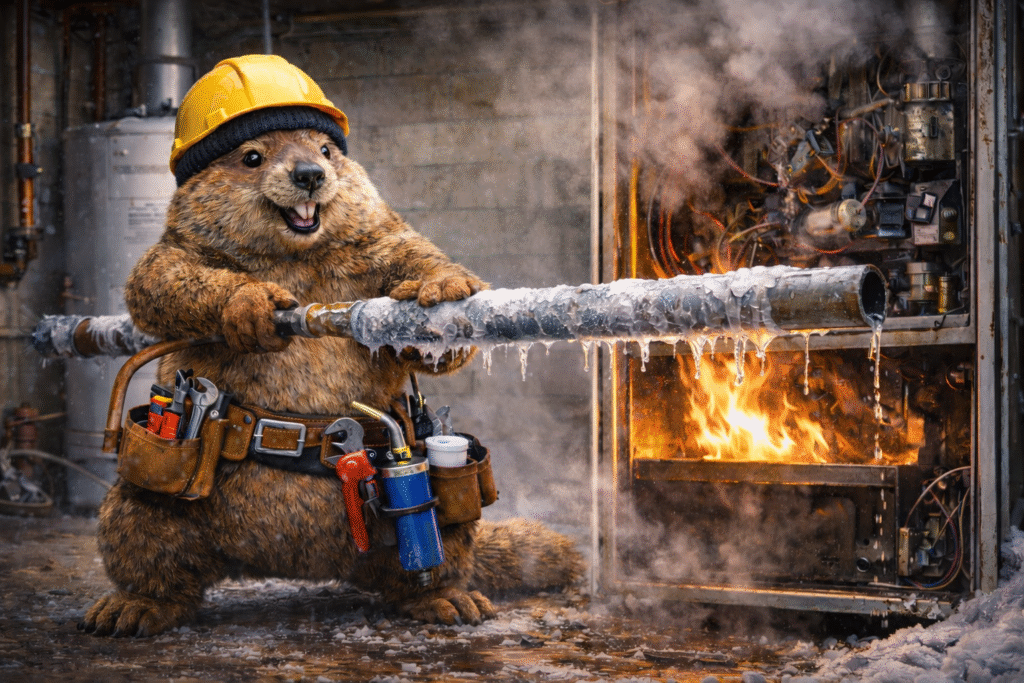
People often think of plumbing and HVAC as separate systems — but in winter, they’re closely connected.
If your furnace fails:
- Indoor temperatures drop
- Pipes are more likely to freeze
- Water heaters struggle to maintain temperature
- Condensation and moisture issues increase
If plumbing fails:
- Water damage can affect furnace components
- Basements flood near HVAC equipment
- Emergency shutoffs interrupt heating systems
That’s why winter maintenance should always consider both systems together.
Benefits of Preventative Maintenance (Before Something Breaks)
Preventative maintenance saves money — period.
Here’s what it helps you avoid:
- Emergency service fees
- After-hours repair rates
- Major water damage
- Furnace replacements instead of minor repairs
- Insurance claims
- Unsafe living conditions
And here’s what it gives you:
- Peace of mind
- Reliable heat
- Lower energy bills
- Longer equipment lifespan
- Fewer surprises
The best time to catch a problem is before it becomes an emergency.
Winter Tips & Tricks Every Homeowner Should Know
Here are a few simple steps you can take right now:
🔧 Plumbing Tips
- Keep cabinet doors open under sinks during cold nights
- Let faucets drip slightly in extreme cold
- Disconnect outdoor hoses
- Insulate exposed pipes in basements and crawlspaces
- Keep garage doors closed if plumbing runs through the garage
- Know where your main water shutoff is
🔥 Furnace Tips
- Replace or clean furnace filters monthly in winter
- Keep vents and returns clear
- Listen for unusual noises (rattling, squealing, humming)
- Check your thermostat batteries
- Don’t ignore short cycling or uneven heating
- Schedule a professional inspection if you haven’t already
If something feels “off,” it probably is.
Don’t Let Punxsutawney Phil Catch You Off Guard
Six more weeks of winter means six more weeks of risk if your systems aren’t ready.
Frozen pipes.
No heat.
Flooded basements.
Emergency calls at 2 a.m.
All of those are preventable with proactive care.
If you’re unsure about the condition of your plumbing or furnace, now is the time to check — before winter checks you.
Final Thought
Groundhog Day is a reminder — not just about the weather, but about preparation.
Your home works hard all winter.
Make sure it’s supported, protected, and ready for what’s ahead.
Because the best emergency is the one that never happens.
To schedule your preventative
Ready to Protect Your Home This Winter?
Don’t wait for a frozen pipe or a furnace breakdown to make your winter worse than it has to be. The best time to schedule maintenance is before disaster strikes.
✔️ Schedule Your Appointment Online
It’s fast, easy, and available 24/7.
👉 Book your service now: https://korrectplumbing.com/book-now
📞 Prefer to Talk with a Real Person?
Our expert team is here to help you with preventive maintenance, emergency preparation, and system checks.
Call or message us anytime:
📱 (937) 837-2333
or visit: https://korrectplumbing.com/contact-us
Don’t Gamble with Winter!
Whether it’s your plumbing, your furnace, or peace of mind, early action saves you money, stress, and headaches later. Schedule today and stay warm all season long.