
Every March, the Miami Valley thaws — and your plumbing quietly pays the price. Months of below-freezing temperatures, ground movement, and pressure surges have stressed your pipes, joints, and drainage systems in ways you can’t always see.
The homeowners who call us in April and May overwhelmingly say the same thing: “I had no idea anything was wrong.”
The good news? A quick inspection right now can catch the biggest culprits before they escalate. This spring plumbing checklist is built specifically for homes in Dayton, Kettering, Huber Heights, Beavercreek, Miamisburg, Vandalia, and across the greater Miami Valley — because our winters are different, and so are the problems they leave behind.
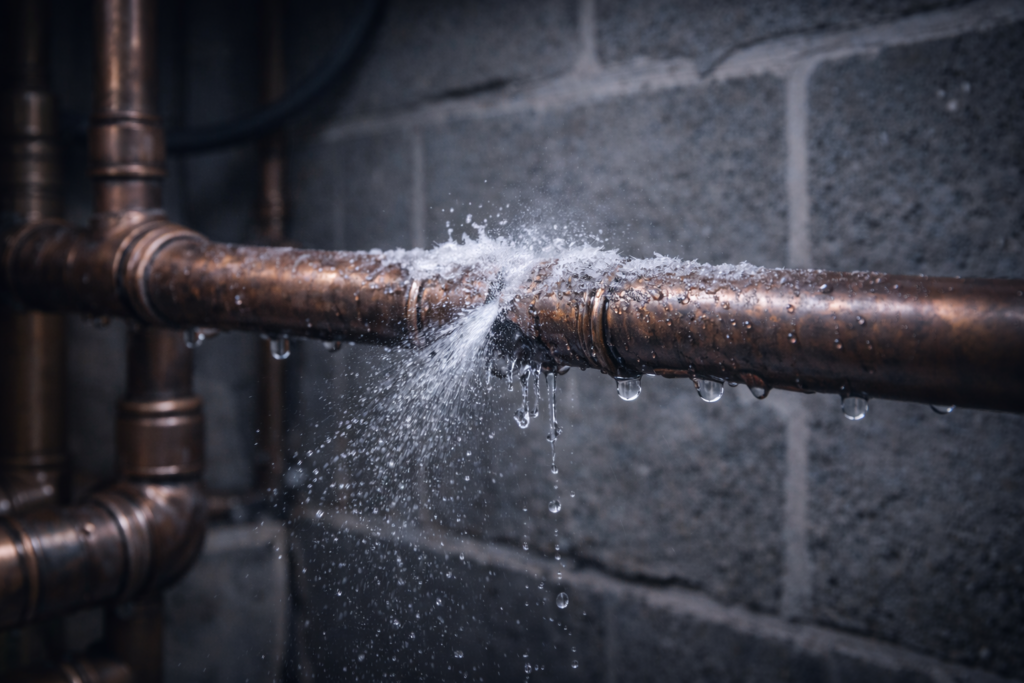
Inspect Every Exposed Pipe for Hairline Cracks
Ohio’s winter temperatures routinely drop into the single digits and teens. When water inside a pipe freezes, it expands with roughly 2,000 pounds of pressure per square inch. Many pipes survive winter intact — but develop hairline fractures that won’t leak until water pressure resumes full flow in spring.
Unexplained wet spots on walls or ceilings, a sudden increase in your water bill, reduced water pressure at multiple fixtures, or a faint musty odor near an exterior wall are all red flags that a pipe may have cracked over winter.
Where to look: Concentrate on pipes in unheated spaces — crawl spaces, garages, attics, and along exterior walls. Basements in older Dayton-area homes (especially those built before 1970) often have exposed galvanized or copper lines that are especially vulnerable.
- ✓Run your hand along exposed pipe runs in the basement and crawl space
- ✓Check for any discoloration, mineral deposits, or rust around pipe joints
- ✓Look for soft, bubbled, or stained drywall along exterior walls
- ✓Monitor your water meter for movement when all fixtures are off — any movement means a hidden leak
Turn off all water-using appliances and check your meter. Write down the reading, wait 15 minutes without using any water, then check again. Any movement means you have a leak somewhere in the system.
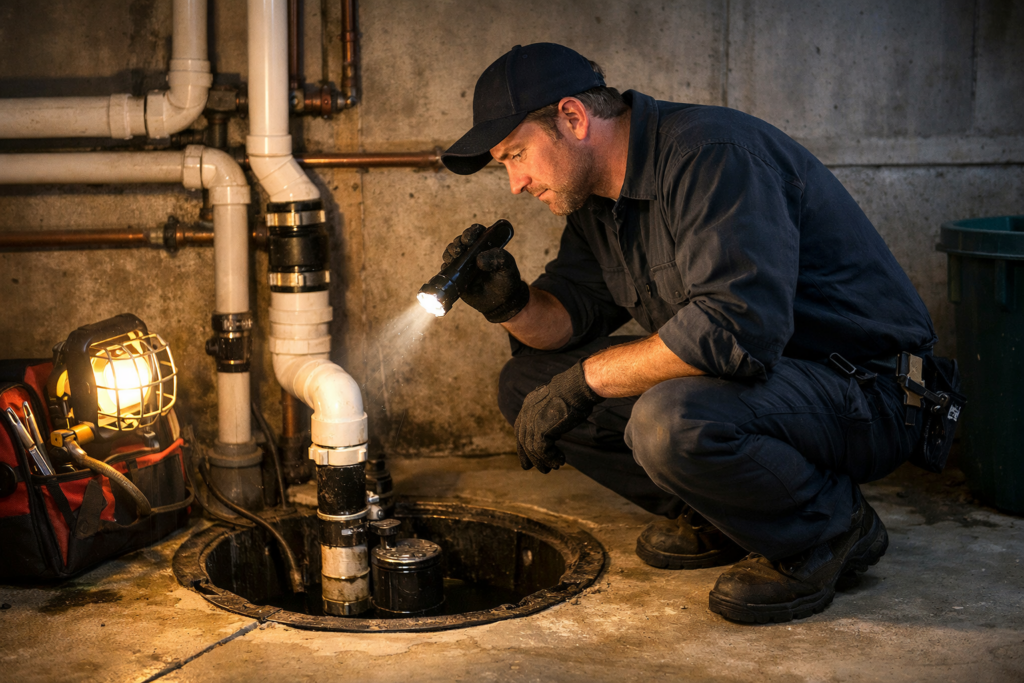
Test Your Sump Pump — Before the April Rains Hit
March is the last window you have to make sure your sump pump is working before the Miami Valley’s spring rains arrive in force. Dayton averages nearly 4 inches of rainfall in April alone, and a failed sump pump can mean thousands of dollars in basement flooding damage within hours.
Sump pumps that ran hard all winter may have worn float switches, corroded wiring, or a discharge line that froze and cracked. A pump that runs — but doesn’t discharge correctly — gives you a false sense of security.
How to Test Your Sump Pump Right Now
- ✓Pour 5 gallons of water into the sump pit and watch the float trigger the pump
- ✓Confirm water is actively discharging out of the home — check the discharge line exit point outside
- ✓Listen for unusual grinding, rattling, or long run times without water clearing
- ✓Check the discharge line for cracks, detachment, or ice-related damage
- ✓Consider a battery backup unit if you don’t already have one — power outages and heavy storms often coincide
Montgomery, Greene, and Warren County see significant groundwater rises every spring. If your home sits in a lower-elevation area — parts of Miamisburg, the Great Miami River corridor, or Huber Heights — a working sump pump is non-negotiable.
Flush and Inspect Your Water Heater
Your water heater worked overtime all winter. Running constantly in a cold garage or basement, it accumulated sediment, stressed its anode rod, and now enters spring as one of the most likely appliances to fail. March is the ideal month to address this — before summer’s high demand pushes a weakened system over the edge.
Dayton’s water supply, sourced through the Greater Dayton Water Authority, carries moderate mineral hardness. That means sediment builds up in water heater tanks faster here than in softer-water regions — making annual flushing especially important for Miami Valley homeowners.
- ✓Flush the tank to remove sediment — sediment reduces efficiency and shortens tank life
- ✓Test the pressure relief (T&P) valve — it should release and reseat cleanly
- ✓Check the anode rod — replace if more than 50% depleted
- ✓Inspect the area around the base of the tank for rust staining or moisture
- ✓Verify thermostat is set to 120°F for safety and efficiency
If your water heater is 10 years or older and you’re noticing rust-colored water, rumbling sounds, or inconsistent temperatures, spring is the best time to plan a replacement before the unit fails unexpectedly. Tankless water heater upgrades are increasingly popular among Dayton homeowners looking to lower utility bills and free up space.
“Ohio’s freeze-thaw season doesn’t just crack pavement. It stresses every pipe joint, every fitting, every sump pump seal in your home. Most of the damage is invisible — until it isn’t.”
— Korrect Plumbing, Serving Dayton & the Miami Valley Since 1950
Clear Your Outdoor Drains & Downspouts
Winter leaves behind a mess — and it all ends up in your drains. Leaves, debris, and silt that accumulated since fall are now saturated and compacted. Combined with snowmelt and spring rain, clogged exterior drains can force water directly toward your foundation.
For Dayton homeowners, this is especially critical. Montgomery County’s clay-heavy soil doesn’t drain easily, meaning water pools fast when exterior drainage is compromised. Areas like Oakwood, Washington Township, and Centerville with mature tree canopies should pay extra attention to gutter and downspout discharge points.
- ✓Clear all gutter downspout extensions — make sure water is directed at least 6 feet from the foundation
- ✓Remove debris from window well drains and any exterior floor drains
- ✓Check that yard drainage channels and swales are clear and sloped away from the home
- ✓Inspect basement window wells for standing water or debris buildup
Run a Full-House Drain Speed Test
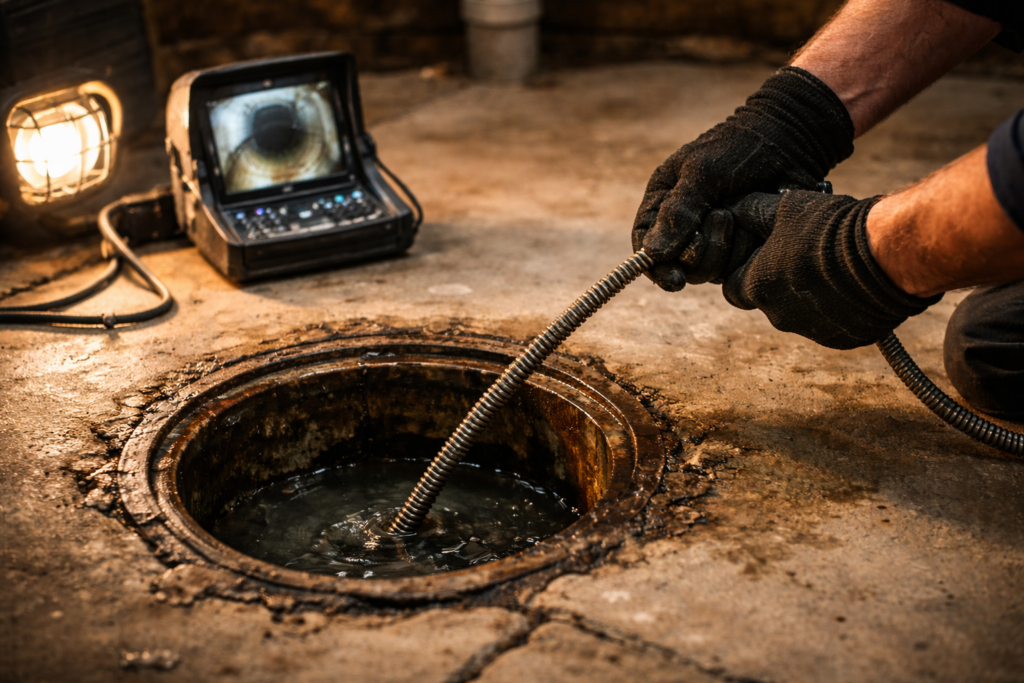
Slow drains in spring are almost never just about soap scum. Over winter, grease, food particles, soap, and hair constrict drain lines. More importantly, root intrusion — which is rampant in Dayton’s older neighborhoods — accelerates in early spring as tree roots chase warmth and moisture.
Dayton has a significant stock of homes built in the 1940s–1970s, many with original cast iron or clay sewer laterals. These are the most vulnerable to root intrusion and joint separation. If your home is in older Dayton neighborhoods — like Twin Towers, North Dayton, Belmont, or Old North Dayton — a spring drain inspection isn’t optional, it’s essential maintenance.
- ✓Run all sinks, tubs, and showers and note any that drain slowly
- ✓Check for gurgling sounds from toilet bowls or drains when other fixtures run — a sign of partial sewer blockage
- ✓Look for multiple slow drains simultaneously — this points to a main line issue, not individual clogs
- ✓Notice any sewage or rotten-egg odors near floor drains in basements
A single slow drain is often a local clog. Multiple slow drains at the same time, or water backing up in one fixture when you use another, signal a main sewer line problem. This requires a professional camera inspection — not a bottle of drain cleaner.
Reconnect and Inspect Outdoor Hose Bibs & Irrigation
You (hopefully) shut off your exterior hose bibs and disconnected hoses before the first hard freeze. Now it’s time to bring them back online — carefully. A frost-free hose bib that didn’t drain completely may have a cracked seat or valve stem that will spray water inside your wall cavity the first time you turn it on.
- ✓Turn the outdoor hose bib on slowly and check for water seeping around the valve body or inside the wall
- ✓Inspect the bib for physical damage — cracks in the brass body, a loose handle, or a valve that won’t shut off fully
- ✓If you have an irrigation system, schedule a spring startup with a licensed plumber to check pressure, valves, and backflow preventer — required by Dayton & Montgomery County code
- ✓Replace rubber washers and packing if hose bibs drip after being turned off
Dayton Municipal Code and Montgomery County require annual testing of backflow prevention devices on irrigation systems. Korrect Plumbing is a licensed backflow tester in the greater Dayton area. Schedule this early — it books up fast in March and April.
Schedule a Professional Plumbing Inspection — The Most Important Step
A DIY visual inspection catches the obvious. A professional plumbing inspection finds everything else. The issues that turn into $5,000–$20,000 emergencies — a pinhole leak behind drywall, a sewer line with a developing belly or root intrusion, a water heater with a compromised anode rod — are exactly the problems that look fine from the outside.
Spring is Korrect Plumbing’s busiest season for a reason: homeowners who get ahead of their plumbing in March and early April avoid the June and July emergency calls. We serve all of the greater Dayton area, including every community in the Miami Valley.
- ✓Full visual inspection of all accessible supply and drain lines
- ✓Water heater condition and efficiency assessment
- ✓Sump pump operation and backup system check
- ✓Sewer camera inspection option for older homes
- ✓Water pressure test — Dayton city pressure can fluctuate seasonally
- ✓Fixture and valve function check throughout the home
Spring Plumbing Questions Dayton Homeowners Ask Us
How much does a spring plumbing inspection cost in Dayton, Ohio?
A professional spring plumbing inspection from Korrect Plumbing starts well below the cost of a single emergency repair. Call us at (937) 837-2333 for current pricing — we offer honest, upfront quotes with no hidden fees. Many homeowners in Dayton, Kettering, and Beavercreek find that our inspections pay for themselves by catching small issues before they become major ones.
What is the most common plumbing problem after an Ohio winter?
In our experience serving Dayton and the Miami Valley, sump pump failure and slow main sewer lines are the two most common spring discoveries. Freeze-thaw cycles also produce hairline pipe cracks and damaged outdoor hose bibs that weren’t visible during winter. Homes in Dayton’s older neighborhoods (pre-1970) often have cast iron or clay sewer lines that sustain root intrusion damage every spring.
Do I need a permit for plumbing repairs in Dayton or Montgomery County?
Most minor repairs — fixing a leaky faucet, unclogging a drain, replacing a fixture — do not require a permit. However, significant work like water heater replacement, sewer line repair, or water service line work typically requires a permit through the City of Dayton’s Building Inspections Division or Montgomery County Public Health. Korrect Plumbing handles all permitting for jobs that require it, ensuring your work is fully code-compliant.
My water pressure seems lower this spring. What could be causing it?
Low water pressure after winter can indicate a partial freeze fracture in a supply line, sediment buildup in a pressure regulator valve, or mineral scale in your home’s main shutoff or individual supply valves. If low pressure is affecting the whole house — not just one fixture — call a licensed Dayton plumber to diagnose the source. It rarely resolves on its own.
Is Korrect Plumbing available for emergency plumbing in Dayton?
Yes — Korrect Plumbing provides emergency plumbing services throughout the greater Dayton metro, including Dayton, Huber Heights, Miamisburg, Kettering, Beavercreek, and everywhere in the surrounding Miami Valley. Call (937) 837-2333 for current availability and response times.